
The Death of the Sales Funnel: Why RevOps Thinks in Flywheels
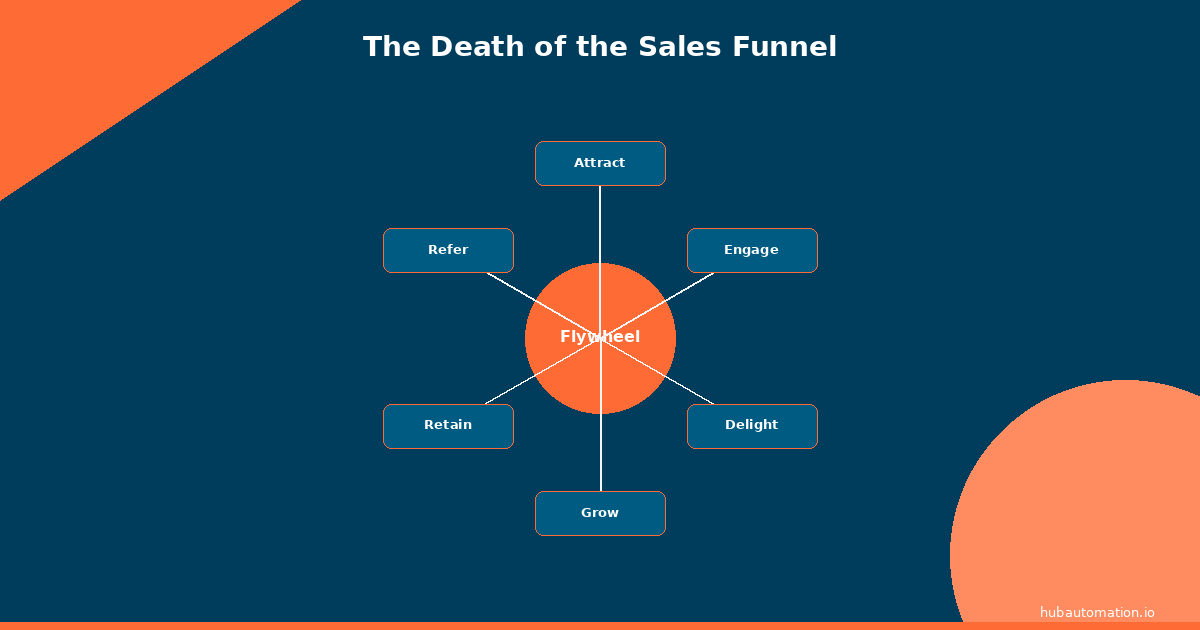
The Sales Funnel is Dead and Dead is Good
The Death of the Sales Funnel: Why RevOps Thinks in Flywheels
Your sales team says marketing sends bad leads. Marketing says sales isn't following up fast enough. Sound familiar? There's a disconnect happening in most companies we work with. And it comes back to one thing: you're still thinking in funnels when you should be thinking in flywheels.
The funnel is dead. Let's check it out.
Why Does HubSpot Attribution Reporting Give Credit to the Wrong Touchpoint?
Here's the problem with funnel thinking. It's linear. You attract prospects at the top, push them through stages, and close them at the bottom. Then what? You move on to the next prospect.
That model worked when customer acquisition was cheap. But in 2025? Customer acquisition costs are 222% higher than five years ago. Retention is the competitive advantage. Expansion revenue is how you scale. Referrals are how you grow organically.
The funnel doesn't account for ANY of that.
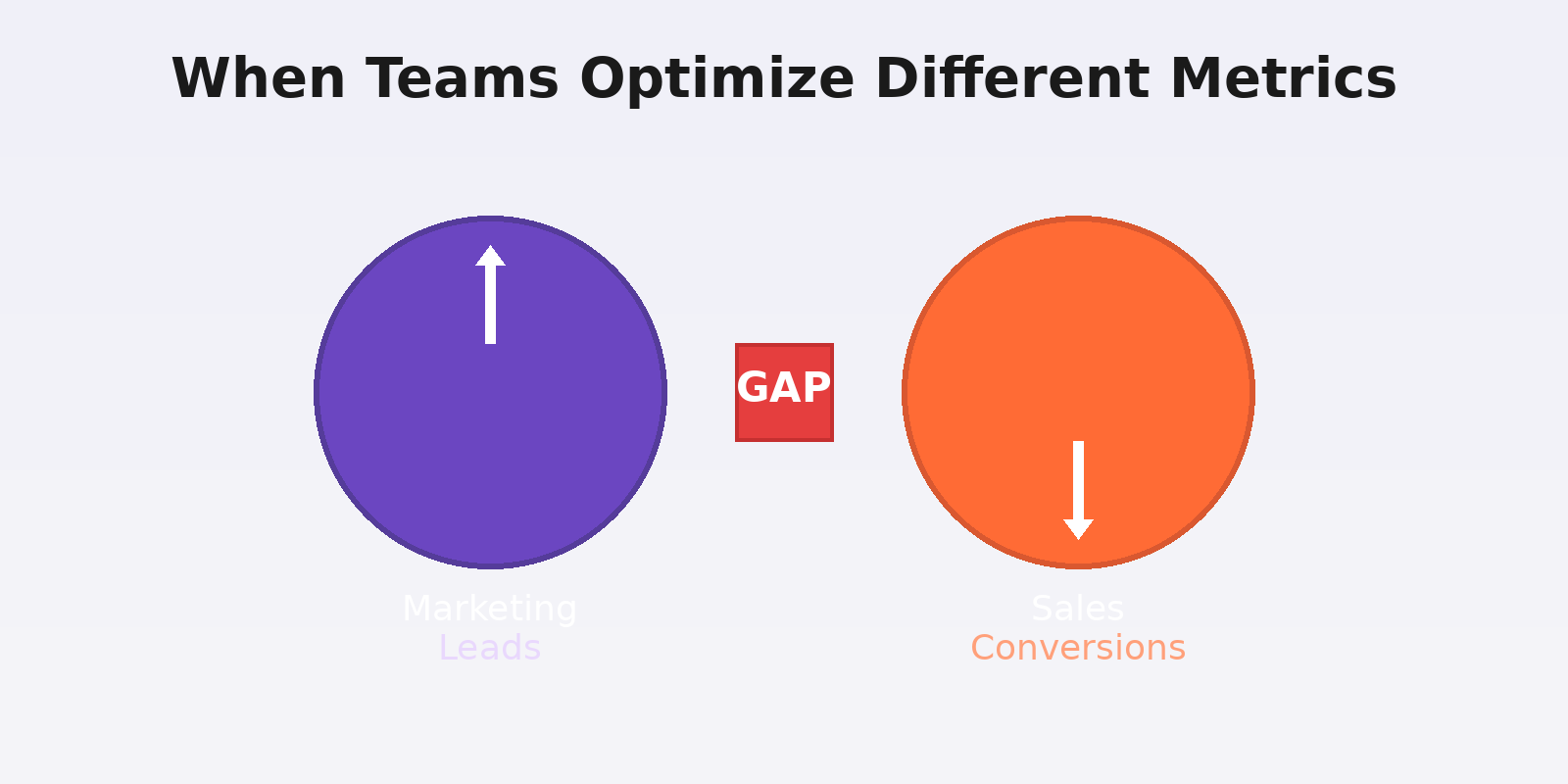
The funnel creates silos that destroy alignment. Marketing owns lead generation. Sales owns conversion. Customer success owns retention. Each team optimizes for their own metric. Nobody optimizes for total revenue growth.
We see this in HubSpot portals every day. Marketing builds lead scoring that sales doesn't trust. Sales creates deal stages that don't connect to campaigns. Customer success tracks NPS but nobody uses it. These teams work in the same CRM but move in different directions.
What This Looks Like in Your Portal
You have separate dashboards for each team. Marketing reports on MQLs. Sales reports on pipeline. Customer success reports on churn. When leadership asks for the full revenue picture, someone manually stitches together three different reports.
That's funnel thinking at work.
How Do I Calculate Total Revenue Growth in HubSpot?
Enter the flywheel. This is different.
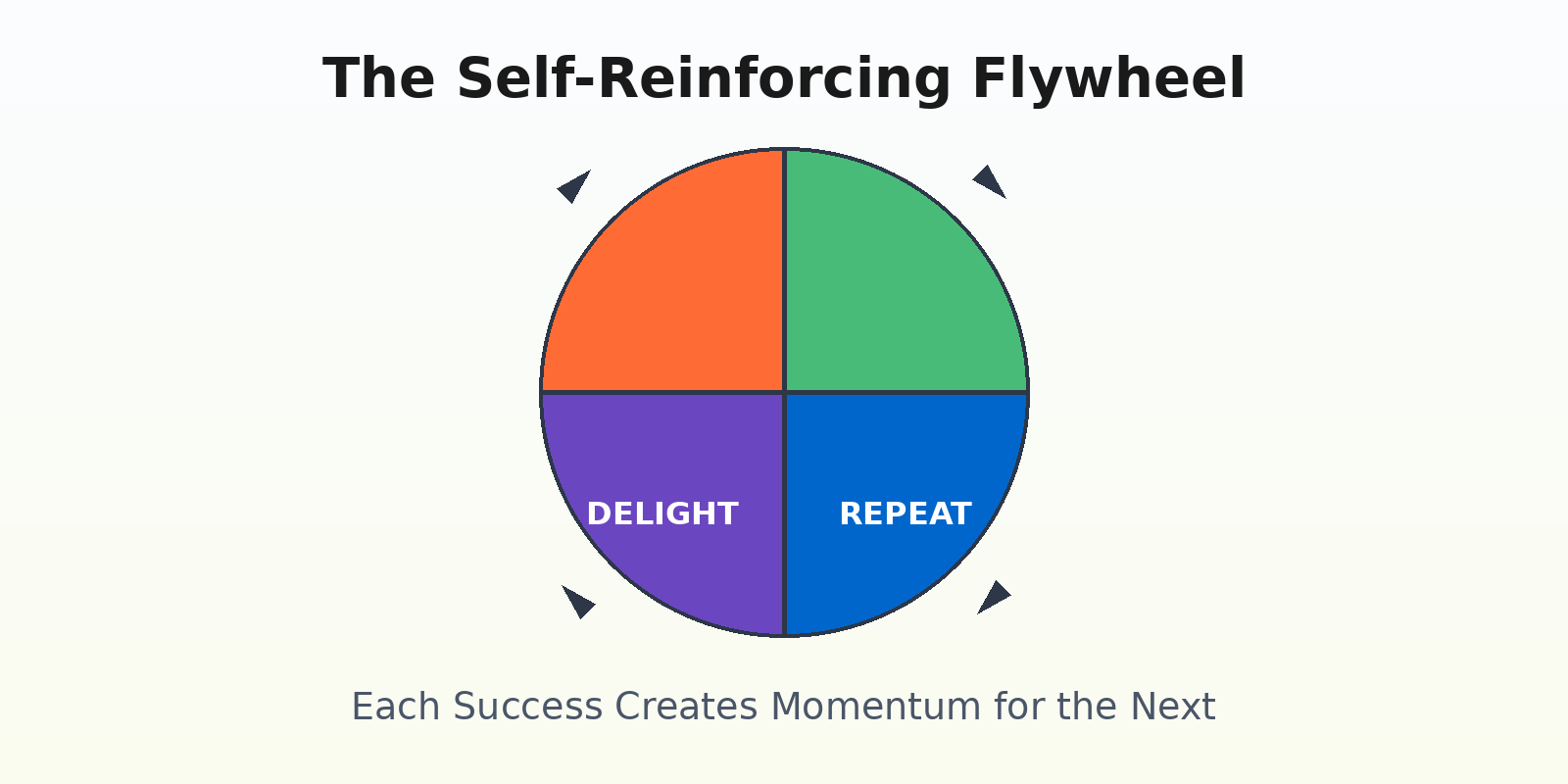
The flywheel is circular. Each turn creates MORE momentum for the next. You attract a customer, engage them, delight them. Then what? In the funnel world, you move on. In the flywheel world, that delighted customer becomes fuel for the next cycle. They refer. They expand. They create momentum.
HubSpot popularized the flywheel framework and we are bullish on it. It changes how teams align. Instead of marketing filling a funnel top and sales closing the bottom, both teams optimize for the SAME thing: motion. How fast can we attract the right customers? How quickly can we engage them? How reliably can we delight them?
Something we love about the flywheel is tight coupling between teams. If marketing optimizes for volume but quality is terrible, sales slows down and the wheel decelerates. They're mechanically linked.
The Implementation
This shows up in your HubSpot instance. Instead of separate lead scoring and deal scoring, you build unified scoring. Instead of campaigns that don't connect to sequences, you have workflows that feed directly into outreach. Instead of separate reporting, you have shared dashboards about revenue velocity.
We like that. Once teams align around the flywheel, they STAY aligned.
Where Do I Start to Align Sales and Marketing in HubSpot?
Most companies understand the flywheel but don't know how to implement it. Here's the practical starting point.
First: map your current flywheel. Don't design the ideal one yet. Draw how revenue actually moves TODAY. Who brings in customers? Who converts them? Where do referrals come from? This exercise is messy. But it's real.
Second: identify sticking points. Where does motion slow down? Are customers stuck in onboarding? Are successful customers not expanding because nobody asks? Most companies have 2 to 3 places where motion slows significantly.
Third: fix the biggest sticking point first. Pick ONE place where you can accelerate motion and focus there. Maybe that's a better onboarding workflow. Maybe that's an expansion playbook. Maybe that's a referral program with automated tasks.
The teams that get this right understand the philosophy BEFORE making changes.
Measure the Whole Cycle
If you're in sales, measure how long customers stay and expand. If you're in customer success, measure referral percentage. If you're in marketing, measure full cycle revenue.
You're all part of the same flywheel.
How Do I Track Customer Health and Expansion in HubSpot?
The flywheel changes what you measure in your CRM. You're not just tracking closed deals. You're tracking motion.
Track customer health scores using custom properties. Build expansion pipelines next to new business pipelines. Measure net revenue retention. Track referrability using contact properties and workflows.
Companies with high net revenue retention grow 1.8 times faster. That metric only makes sense in a flywheel model. In a funnel model, you close a deal and you're done. In a flywheel model, closing is just the beginning.
Your HubSpot instance should surface this motion. Your dashboards should show it. Your workflows should accelerate it. If your technology is organized around funnels, you'll fight your tools. If it's organized around the flywheel? Your tools help you.
What This Means For Your Portal
The funnel worked when acquisition was everything. But in a market where retention is the competitive advantage, the funnel is obsolete.
The flywheel is how modern revenue operations think. If you're still thinking in funnels, you're leaving velocity on the table.
Is your revenue operation designed for a funnel or flywheel? Most companies are in between. They optimize parts but not the whole. Book a free portal audit with HubAutomation to map your actual revenue flywheel and identify where to accelerate motion.
We are bullish on the flywheel model and believe this is the framework that scales in 2025 and beyond.
Have you tried moving from funnel to flywheel thinking? Would you have better alignmente between teams? Let us know in the comments below.
HubAutomation is a certified HubSpot Solutions Partner specializing in migrations, integrations, and portal optimization.
Want to see where your blind spots are? We run free diagnostics for companies like yours.
Want to see where your CRM is leaking revenue?
We run free 30-minute HubSpot diagnostics. Your portal, on screen, live. You leave with a prioritized fix list, yours to keep whether you hire us or not.
| Book my free 30-min audit |